The Art of Yoga Adjustments: How to Offer Safe & Supportive Touch in Yoga Teaching
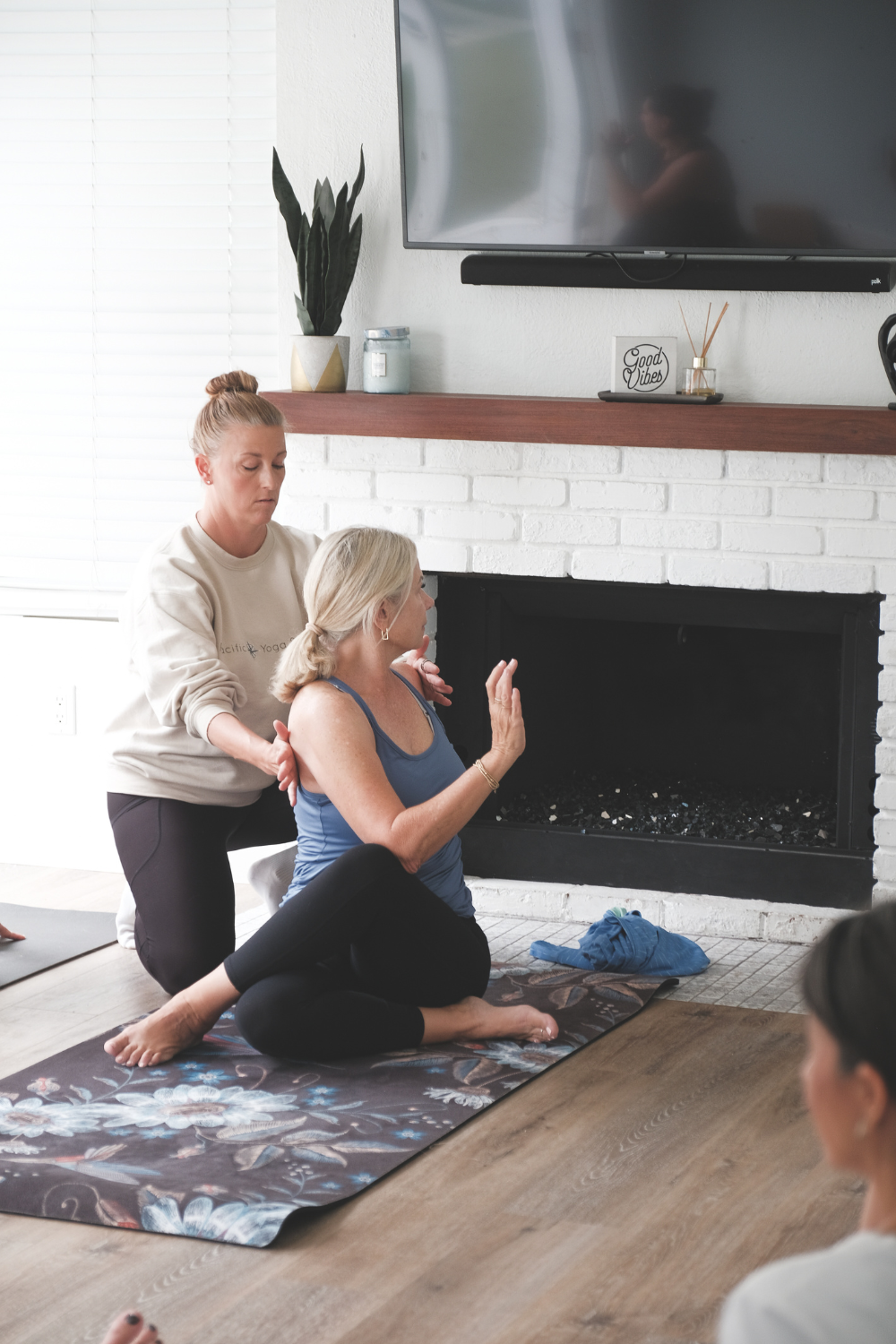
One of the most powerful tools a yoga teacher has is the ability to guide students into safer, deeper alignment. But with that power comes responsibility—especially when it comes to hands-on yoga adjustments. When done thoughtfully, adjustments create trust, support, and confidence in a student’s practice. When done carelessly, they can cause discomfort or even injury.
In this post, we’ll explore the art of adjustments in yoga teaching, how to use supportive touch with clarity and respect, and best practices for creating a safe and empowering experience for your students.

Why Yoga Adjustments Matter
Yoga adjustments are more than just physical corrections. They serve to:
- Refine alignment and prevent injury.
- Deepen awareness of subtle body cues.
- Build connection between teacher and student.
- Empower students to explore their edge safely.
When adjustments are safe and intentional, they can transform a student’s practice.
Principles of Safe Yoga Adjustments
- Ask for Consent. Always obtain permission before offering touch. Use verbal cues or consent cards so students feel empowered to choose.
- Focus on Support, Not Perfection Adjustments should enhance stability and comfort, not force students into an idealized shape.
- Use Clear and Grounded Touch. A light and uncertain touch can feel confusing. Aim for steady, confident contact that communicates safety.
- Prioritize Alignment Over Depth. Help students stack joints, engage muscles, and find breath—not just “go deeper.”
- Offer Verbal + Visual Cues First. Often, a student only needs a clearer cue before a physical adjustment is necessary.
Supportive Adjustment Techniques
Here are a few ways to create safe, empowering assists in common poses:
- Downward Dog → Grounding hands into the mat, lengthening through the hips with a gentle hand to extend the back.
- Warrior II → Guiding shoulders down and widening stance for stability.
- Seated Forward Fold → Supporting length in the spine rather than pressing on the back.
Each adjustment should feel like a partnership—never a correction.
When NOT to Adjust
A wise teacher knows when to step back. Avoid hands-on assists if:
- A student appears uncomfortable or says “no.”
- If a student reacts in a negative way. Lightly finish the adjustment and make note to give them space in the future.
- You’re unsure of anatomy or injury history.
- The class is too large to adjust safely.
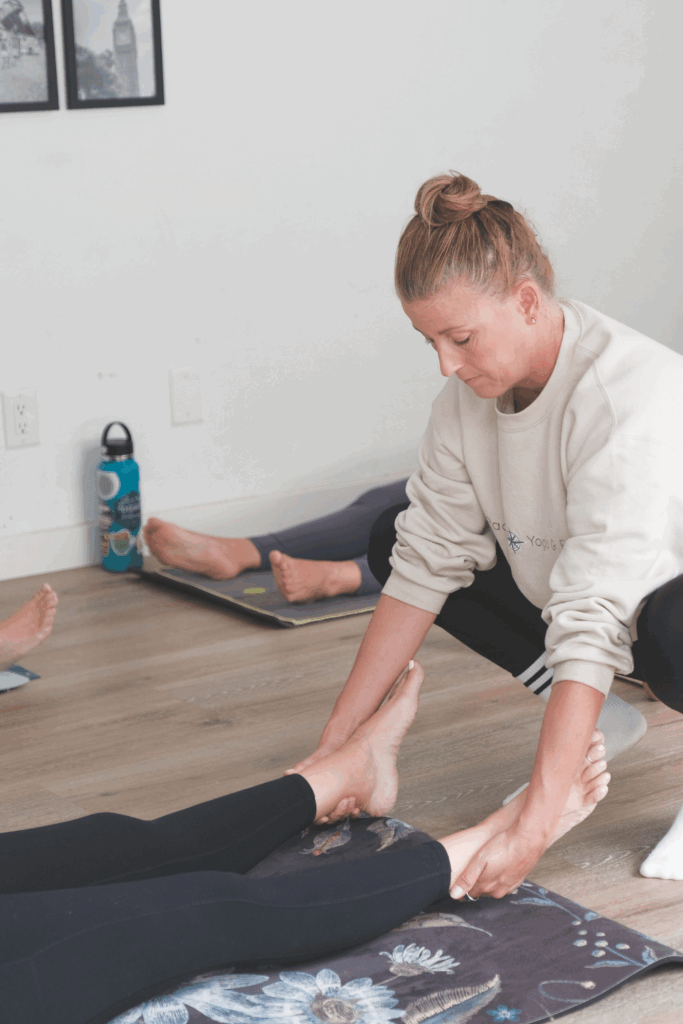
The art of yoga adjustments lies in awareness, respect, and intention. Safe, supportive touch can elevate a student’s practice, but it should always be rooted in consent and care. As teachers, our role is to empower—not impose.
By blending mindful touch, clear communication, and strong anatomical knowledge, we can create a yoga experience that is both safe and deeply transformative.
Are you interested in furthering your teachings? Check out my teacher trainings here.